
Democratizing GRC: How Organizations Can Make Risk and Compliance Everyone’s Responsibility
August 18, 2026
Rajiv


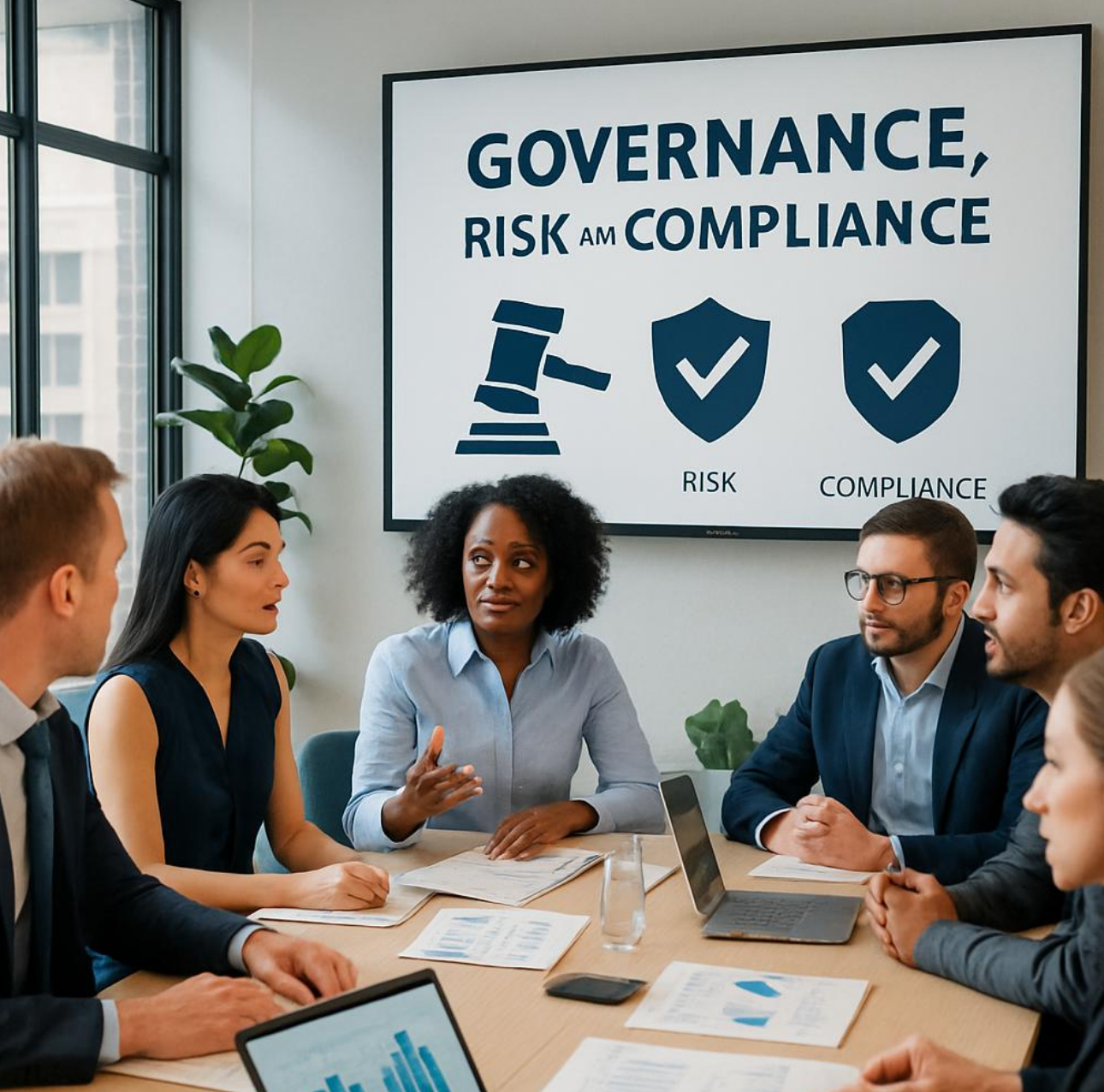
Governance, risk, and compliance (GRC) have traditionally been viewed as responsibilities belonging primarily to compliance officers, risk managers, legal teams, and senior executives. But modern organizations operate in a far more connected environment. Cybersecurity threats, third-party risks, regulatory requirements, data privacy obligations, operational disruptions, and reputational risks can emerge from virtually anywhere in the business.
That reality is changing how organizations think about GRC.
Instead of treating compliance as a specialized function that operates separately from everyday business activities, organizations can build a shared risk and compliance culture in which employees understand how their decisions contribute to the organization's overall risk profile.
This approach is sometimes described as democratizing GRC: making governance, risk, and compliance understandable, accessible, and actionable across the organization.
The goal is not to turn every employee into a compliance professional. It is to give people the knowledge, processes, technology, and accountability they need to recognize risks, follow appropriate controls, and escalate concerns when necessary.
What Does It Mean to Make Risk and Compliance Everyone’s Responsibility?
Making risk and compliance everyone's responsibility means embedding appropriate risk awareness into everyday roles and decisions.
The compliance department may establish frameworks, interpret regulations, monitor controls, and provide oversight, but employees throughout the organization interact with risks every day.
For example:
- A procurement employee may identify a potential vendor risk.
- A customer service representative may encounter a complaint that indicates a compliance problem.
- An IT employee may identify a cybersecurity vulnerability.
- A manager may notice that an internal control is not operating effectively.
- A sales employee may encounter questions about customer data or acceptable business practices.
- Senior executives may need to evaluate strategic and reputational risks before making major decisions.
A collaborative GRC model gives these employees clear ways to identify, report, document, and respond to issues.
The result is a broader organizational risk network rather than a small compliance team attempting to monitor every activity independently.
Why Is Shared Responsibility Important for Modern GRC?
Organizations are becoming increasingly interconnected.
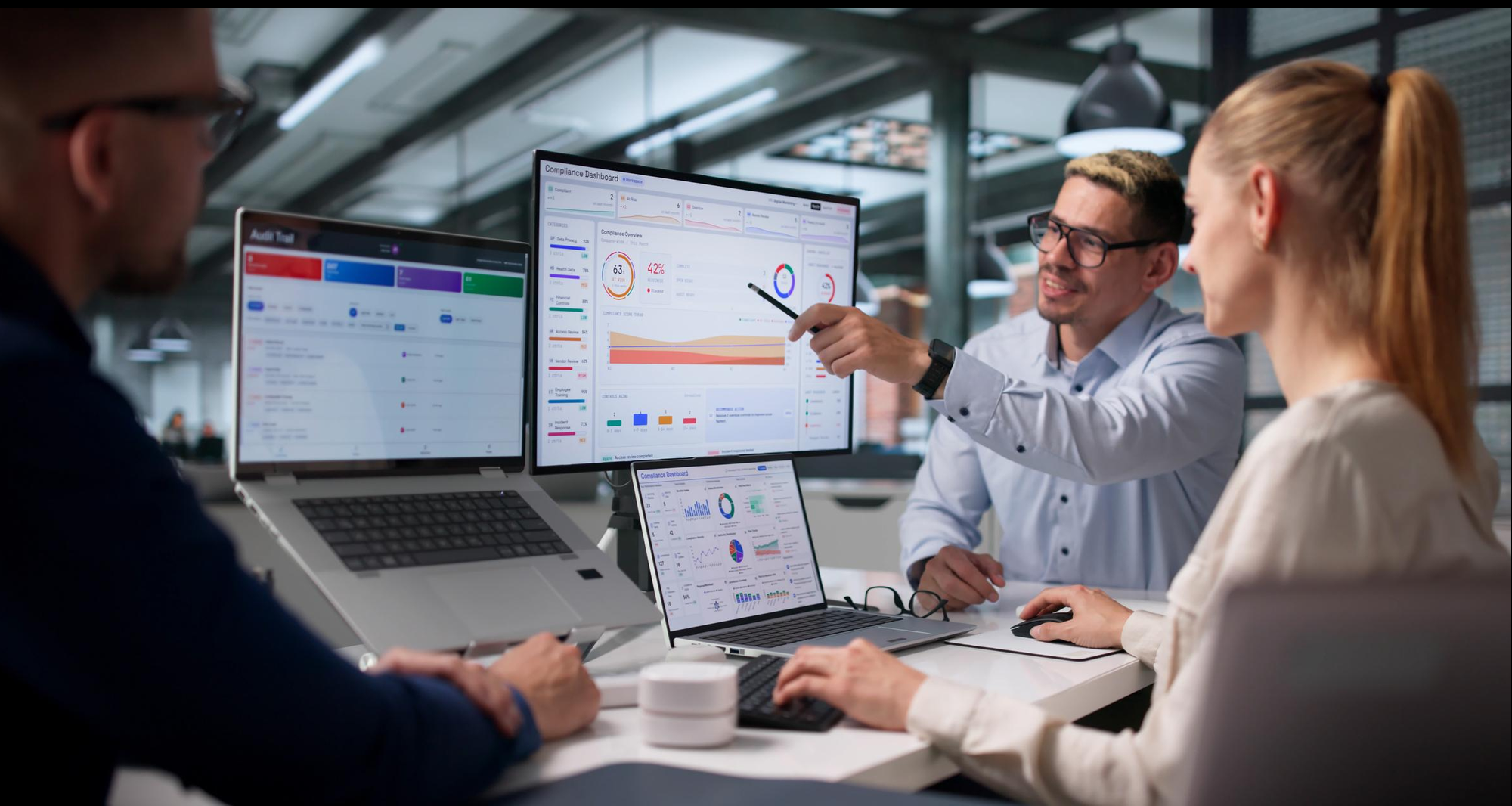
Businesses rely on cloud technology, third-party vendors, financial partners, remote employees, customer data, automated systems, and complex supply chains. Each relationship or system can introduce additional risks.
A centralized compliance team cannot always observe every risk as it emerges.
Employees closest to a business process are often among the first people capable of noticing something unusual. Giving them appropriate knowledge and reporting mechanisms can therefore create an important early-warning system.
Shared responsibility can also help organizations move from reactive compliance to proactive risk management.
Instead of discovering a problem during an audit or after an incident, organizations can identify warning signs earlier and respond before the issue becomes more serious.
1. Make Compliance Easy to Understand
One of the biggest barriers to democratized GRC is complexity.
Employees may receive lengthy policies filled with technical, regulatory, or legal terminology without understanding how those policies apply to their actual jobs.
Effective compliance communication should answer practical questions:
What am I expected to do?
What should I avoid doing?
What risks should I watch for?
What should I do if something goes wrong?
Policies should therefore be translated into clear procedures and role-specific guidance.
A customer-facing employee does not necessarily need the same level of regulatory detail as the compliance department. Instead, that employee needs clear instructions for situations they are likely to encounter.
Making compliance understandable makes it more actionable.
2. Define Clear Risk and Control Ownership
Shared responsibility does not mean unclear responsibility.
In fact, democratized GRC requires organizations to define ownership more clearly.
Every important risk should have an appropriate owner. Controls should also have individuals or teams responsible for implementing, reviewing, testing, or documenting them.
For example, an organization could identify:
Risk owner: Who is accountable for managing the risk?
Control owner: Who ensures that a particular control is operating?
Process owner: Who manages the underlying business activity?
Compliance oversight: Who verifies that regulatory expectations are being addressed?
Clear ownership prevents the common problem of assuming that "compliance will handle it."
Modern GRC technology can support this model by allowing organizations to assign ownership and link controls directly to relevant risks. Themis, for example, provides control inventory capabilities designed to assign ownership, assess control effectiveness, and connect controls with risks.
3. Build Risk Awareness Into Everyday Work
Compliance is more effective when it becomes part of normal business operations rather than an occasional activity.
Organizations can integrate risk thinking into activities such as:
- Vendor onboarding
- Product development
- Customer interactions
- Data management
- Procurement
- Employee onboarding
- Strategic planning
- Contract approvals
- Technology implementation
- Business partnerships
Consider third-party onboarding.
Instead of selecting a vendor and involving compliance only at the final approval stage, teams can consider regulatory, cybersecurity, operational, financial, and reputational risks earlier in the process.
Themis' vendor management capabilities, for example, support centralized vendor information, questionnaires, risk assessments, and due diligence processes.
This type of integration turns risk management into part of the workflow rather than a separate obstacle at the end of it.
4. Create a Central Source of Truth
Fragmented information is a major obstacle to collaborative compliance.
Policies may exist in one system, risk assessments in another, vendor documentation in email, audit evidence in spreadsheets, and approvals inside separate communication platforms.
When employees cannot easily find current information, participation becomes difficult.
A centralized GRC environment can help organizations establish a more consistent source of truth for policies, procedures, risks, controls, documents, and related activities.
Themis positions its platform around collaborative GRC and centralized compliance processes, including policies, procedures, risk assessments, vendor management, documents, and other governance and compliance activities.
Centralization can also make it easier to understand who made a change, what was approved, which version is current, and what action still needs to be completed.
5. Turn Policies Into Active Processes
Publishing a policy does not automatically create compliance.
Employees need to understand it, acknowledge it when appropriate, and incorporate it into their work.
Organizations should therefore move from passive policy storage toward active policy management.
That can include:
- Clear ownership
- Review schedules
- Approval workflows
- Version control
- Employee attestations
- Links between policies and procedures
- Documented changes
- Accessible guidance
Themis' policy management functionality, for example, includes centralized policies, collaboration, approval, version control, and attestations.
These capabilities help turn policies from static documents into operational components of the compliance program.
6. Give Employees Simple Ways to Raise Concerns
Employees cannot participate effectively in risk management if reporting a concern is complicated or unclear.
Organizations should establish straightforward escalation paths.
Employees should know:
- What needs to be reported
- Where concerns should be submitted
- Who reviews them
- What information should be included
- What happens after submission
Just as importantly, leadership should create an environment in which employees feel comfortable raising legitimate concerns.
When employees believe that identifying risk is valued rather than punished, organizations are more likely to uncover issues earlier.
7. Use Technology to Enable Collaboration
Technology is a critical enabler of democratized GRC, but the goal should not simply be to digitize existing manual processes.
The larger opportunity is to connect people, information, workflows, and accountability.
A modern GRC platform can help teams collaborate around risk assessments, policies, procedures, controls, documents, vendors, and compliance activities.
Themis describes its approach as "Collaborative Compliance" and provides built-in collaboration capabilities intended to help stakeholders work together across governance, risk, and compliance processes.
This matters because employees are more likely to participate when compliance tools fit naturally into their workflows.
8. Make Risk Assessments Collaborative
Risk assessments should not exist only within the risk department.
Business teams often possess important operational knowledge that compliance professionals need to accurately understand risks.
Collaborative assessments can bring together insights from departments such as:
- Compliance
- Legal
- Finance
- Information security
- Operations
- Procurement
- Product
- Human resources
- Executive leadership
Themis' Risk Assessment module supports questionnaires, methodologies, scoring, documentation, permissions, and collaboration features that can help multiple stakeholders participate in risk reviews.
Combining compliance expertise with frontline business knowledge can create a more complete picture of organizational risk.
9. Leadership Must Model Risk-Aware Behavior
A strong compliance culture starts with leadership.
Employees pay attention to what leaders prioritize, reward, and tolerate.
If executives consistently bypass controls to move faster, employees may interpret compliance as optional. If leadership considers risk when making strategic decisions, employees are more likely to adopt the same mindset.
Leaders should therefore communicate that responsible risk management supports sustainable business growth.
Compliance should not automatically be framed as the department that says "no."
Its role can instead be positioned as helping the organization find responsible ways to say yes.
10. Measure Participation, Not Just Violations
Traditional compliance metrics often focus heavily on negative outcomes such as incidents, violations, failed controls, or audit findings.
Those metrics remain important, but organizations can also measure whether employees are actively participating in the GRC program.
Useful indicators could include:
- Policy attestation completion
- Risk assessment participation
- Control completion rates
- Issue resolution times
- Training completion
- Vendor review status
- Overdue compliance tasks
- Employee-reported concerns
- Repeat findings
- Time required for approvals
These measures can help leaders understand whether compliance is genuinely becoming embedded across the organization.
What Are the Benefits of Democratizing GRC?
When implemented carefully, collaborative GRC can provide several organizational benefits.
Earlier risk identification: Employees closest to processes can identify emerging issues sooner.
Greater accountability: Clearly assigned ownership makes it easier to understand who is responsible for risks and controls.
Better collaboration: Business, compliance, legal, risk, security, and leadership teams can work from shared information.
Faster decision-making: Centralized information and defined workflows can reduce unnecessary back-and-forth.
Improved compliance culture: Employees begin viewing compliance as part of their roles rather than somebody else's responsibility.
Greater organizational resilience: Better visibility into risks can help organizations prepare for disruptions and respond more effectively.
Most importantly, democratizing GRC can shift the organization's mindset from "the compliance team manages risk" to "we manage risk together."
The Future of GRC Is Collaborative
Modern risk environments are too interconnected for governance, risk, and compliance to remain isolated within one department.
The compliance team will always have specialized responsibilities. But successful GRC increasingly depends on participation from the entire organization.
Employees need accessible policies. Managers need visibility into relevant risks. Control owners need clear responsibilities. Leadership needs reliable information for decision-making. Compliance professionals need efficient ways to coordinate all of these activities.
Technology can connect these pieces, but culture remains equally important.
The strongest approach combines people, processes, accountability, collaboration, and technology.
That is the foundation of democratized GRC.
Frequently Asked Questions
What does democratizing GRC mean?
Democratizing GRC means making governance, risk, and compliance accessible and actionable across an organization rather than limiting responsibility to specialized compliance or risk teams. Employees participate at the appropriate level based on their roles.
Should every employee be responsible for compliance?
Employees should be responsible for the compliance requirements relevant to their roles. This does not mean everyone becomes a compliance expert. The compliance function still provides specialized guidance and oversight, while employees understand their responsibilities and know when to escalate concerns.
Why is compliance culture important?
A strong compliance culture helps employees recognize that ethical behavior, regulatory obligations, risk awareness, and internal controls are part of everyday business decisions. This can encourage earlier identification and escalation of potential issues.
How can GRC software improve collaboration?
GRC software can centralize information, assign ownership, automate workflows, manage policies and documents, facilitate risk assessments, and give stakeholders greater visibility into compliance activities.
What is the difference between traditional and collaborative GRC?
Traditional GRC can become centralized around specialized teams and disconnected systems. Collaborative GRC emphasizes shared information, cross-functional participation, defined ownership, and technology-supported workflows while maintaining appropriate oversight.
How can organizations start democratizing GRC?
Start by identifying major risks and responsibilities, simplifying policies, assigning risk and control owners, improving employee education, establishing clear escalation processes, and centralizing GRC information. Technology can then help scale and automate these processes.
Can collaborative GRC improve business decision-making?
Yes. When relevant risk information reaches decision-makers earlier, teams can evaluate potential regulatory, operational, reputational, financial, and third-party risks alongside business opportunities.
Make Compliance Collaborative With Themis
Risk and compliance are most effective when they are embedded throughout the organization rather than isolated within one department.
Themis helps organizations bring governance, risk, and compliance activities together through collaborative tools for risk assessments, policies, procedures, controls, vendors, documents, and more.
Ready to democratize GRC across your organization? Explore Themis and discover how collaborative compliance can help your teams manage risk with greater visibility, accountability, and efficiency.


